
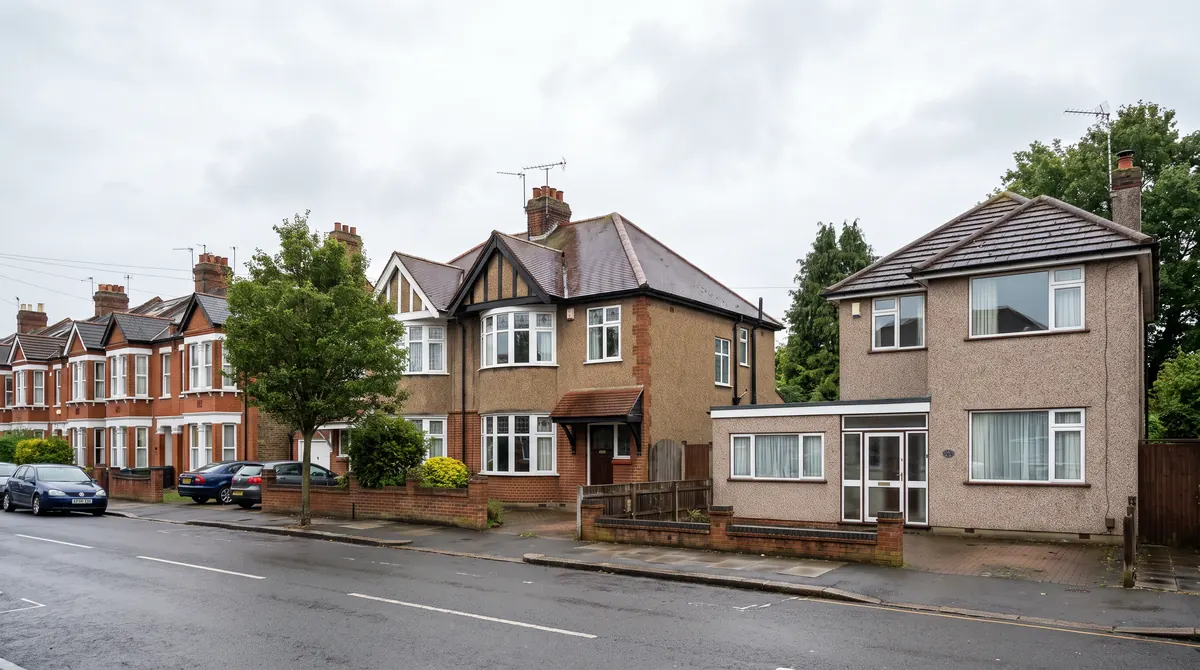
Every kind of house has its own loft problems
Terraces get damp, 1930s semis get squashed, trussed lofts get spray foam. Find yours.
Illustration: homes of different ages on an English street
- Victorian and Edwardian terraces
- Older terrace lofts often run damp, have gaps into next door and old, thin insulation. What we look for and how we fix it.
- 1930s semis
- 1930s semi lofts are roomy and often used for storage, so the insulation gets squashed. What we find and how we fix it.
- Post-war houses
- Post-war homes often have thin, old insulation and lofts that have never been looked at properly. What to check and what we fix.
- 1960s to 1980s houses
- Trussed lofts from the 60s to 80s are cramped, often have early thin insulation and sometimes spray foam. What we fix.
- Bungalows
- In a bungalow every room is under the loft, so damp, pests or thin insulation affect the whole house. What we check and fix.
- New-build homes
- New-build lofts aren’t always finished well: gaps, squashed insulation, blocked eaves. What to look for and what we put right.
- Period and listed homes
- Old lofts need to breathe. How we deal with damp, old timber and spoiled insulation in period and listed homes.
- Top-floor flats
- If you’re in a top-floor flat, the loft above affects you most. Who to ask, and what we can fix.
Tell us what you’ve found. We’ll find the cause.
Describe the problem and we’ll look, explain it and quote the fix in writing. Free.