
Mineral wool: what goes wrong with it, and how to lay it right
Most lofts are insulated with mineral wool. It works well when it’s dry, deep and fluffy, and badly when it’s squashed, wet or soiled. Here’s how to tell.
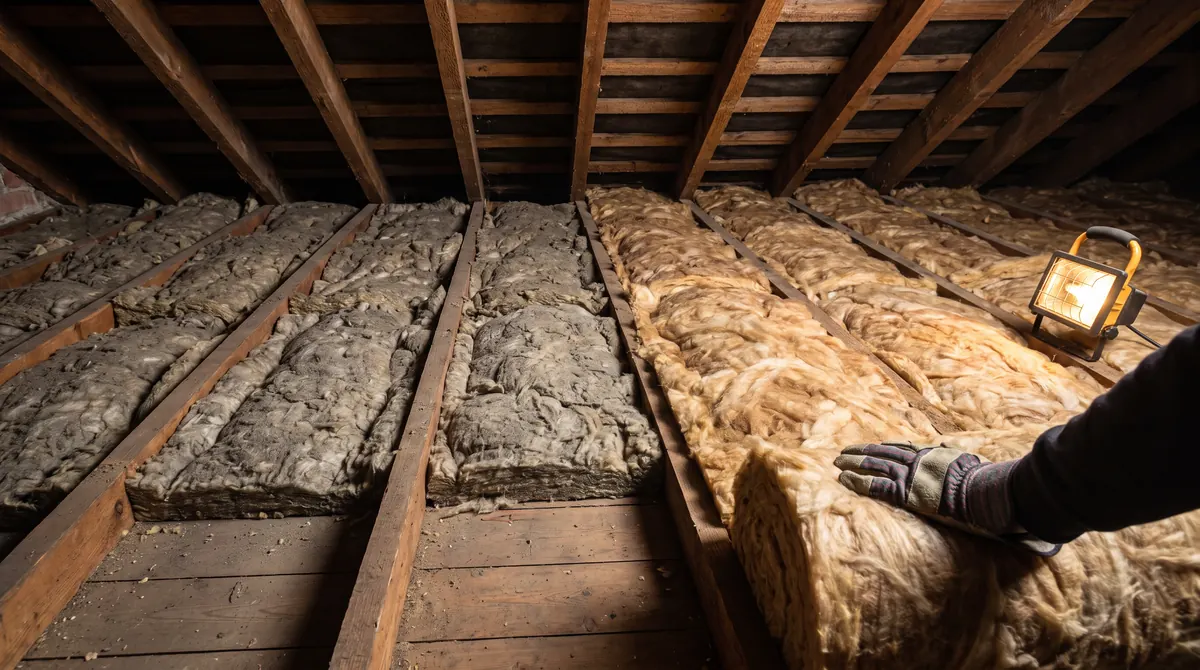
Illustration: mineral wool laid on the loft floor
| What it is | Fibres spun from glass or stone, in rolls |
|---|---|
| Where it goes | On the loft floor, between and across the joists |
| What goes wrong | Flattened by storage, damp, soiled by pests |
| Sign it’s failing | Grey, thin and below the tops of the joists |
| Fix | Top up if sound; replace if not |
Why it stops working
Mineral wool insulates because of the air trapped between its fibres. Put boxes on it and it flattens. Let it get wet and it slumps and clumps. Let mice into it and it’s tunnelled and soiled. In each case it looks grey and thin and the loft loses heat.
Top up or replace?
If it’s dry, clean and just too thin, a new layer across the joists is enough. If it’s damp, stained, mouldy or full of droppings, it should come out, and the cause should be fixed before new insulation goes in.
How we lay it
A layer between the joists, a second across them, eaves kept clear with trays, cables lifted on top, pipes and tanks lagged. It always stays on the loft floor, never pushed up between the rafters.
Common questions
How long does mineral wool last?
Is old mineral wool dangerous?
Can I put new mineral wool over old?
Tell us what you’ve found. We’ll find the cause.
Describe the problem and we’ll look, explain it and quote the fix in writing. Free.